

Travel disrupts sleep through unfamiliar sounds, inconsistent room temperatures, and mattresses that rarely feel like home. This makes the right travel sleep essentials more important than most travelers realize.
This article covers four practical evaluation points for anyone seeking better rest while traveling. These points include temperature regulation, feel and resistance, hygiene and care, and real-world use compatibility.
Each section examines what to look for across different sleep comfort items, from hotel sleep comfort layers to weighted options. Readers will leave with a clear framework and a checklist to guide any purchase decision.
Sleep Gear Performance Ratings
The following ratings evaluate travel sleep gear against six criteria most relevant to travelers. These include how well an item regulates temperature across environments, how it feels in real use, and how easy it is to care for on the road. The ratings also consider how well it adapts to different trip formats, its design and packability, and its overall value for the investment.
| Criteria | Rating |
|---|---|
| Temperature Regulation and Breathability | 9/10 |
| Feel, Resistance, and Tactile Comfort | 9/10 |
| Hygiene and Care for Frequent Use | 8/10 |
| Adaptability Across Trip Formats | 8/10 |
| Design and Packability | 8/10 |
| Value for the Investment | 9/10 |
Temperature Regulation and Breathability
Temperature regulation is the most commonly cited sleep disruptor among frequent travelers, as hotel rooms fluctuate between overcooled and overheated environments. Sleep gear made with natural cotton breathes differently than synthetic alternatives, allowing moisture to move away from the body.
Items using polyester liners or synthetic fills tend to create a consistent warmth that works in one direction only. Breathable construction gives the body more surface area to self-regulate across the night, making it crucial for temperature-sensitive sleepers.
- Quilted construction supports even breathability across the surface
- Glass bead fill stays cooler and quieter against the body
Feel and Tactile Comfort
The feel of a sleep layer directly affects how quickly the nervous system settles in an unfamiliar environment. Resistance plays a measurable role in signaling safety to the body, particularly for light sleepers who are sensitive to ambient noise.
Items that offer consistent, evenly distributed weight across the body tend to reduce the restless quality of sleep in new spaces. For travelers who rely on tactile familiarity to fall asleep, bringing a personally chosen comfort layer is among the highest return sleep essentials they can pack.
- Consistent pressure is the goal for travel-sized comfort layers
- Tactile familiarity across trip nights improves sleep onset speed
Hygiene and Care Protocols
Hygiene is an underconsidered factor in travel sleep gear, particularly for items used across multiple accommodations. Sleep layers that are machine washable and dryer safe require no special care routine, which matters when traveling with limited access to laundry facilities.
Lead-free mini glass beads do not absorb odors or break down the way synthetic pellet alternatives can over time.
- All cotton lining reduces allergen accumulation over time
- OEKO-TEX certified materials confirm freedom from all chemicals across components
Adaptability Across Trip Formats
Not all travel sleep situations are the same; a solo hotel stay differs significantly from a road trip or an overnight flight. Sleep gear that adapts across these contexts delivers more consistent value than items designed for a single use case.
Items sized as throws or single-person blankets travel more easily than larger options and remain practical across varied environments. The best travel sleep gear requires no setup, no accessories, and no modification to the environment it enters.
- No setup construction adds practical value
- Neutral design integrates without clashing with varied accommodation aesthetics
- Year-round breathability removes the need to pack climate-specific alternatives
Design and Packability
A sleep comfort item that takes up half a suitcase will be left at home, defeating its purpose entirely. Design matters for travel dimensionally; how the item folds, whether it compresses, and what it requires to transport are practical questions.
Items that come with a canvas tote or structured carry option are easier to manage in transit and arrive in usable condition. For travelers who prioritize function and considered design, a well-constructed cotton sleep layer looks intentional rather than improvised.
Value for the Investment
Sleep gear purchased specifically for travel is only worth the spend if it performs reliably across multiple trips and accommodations. Items made from natural materials carry a higher upfront cost but last longer, wash better, and maintain their feel over time.
The value case for a quality cotton sleep layer rests on the compounding return across a year of trips. The cost per night calculation positions well-made sleep essentials as among the more efficient travel investments available.
Weighted Blankets vs Standard Hotel Throws
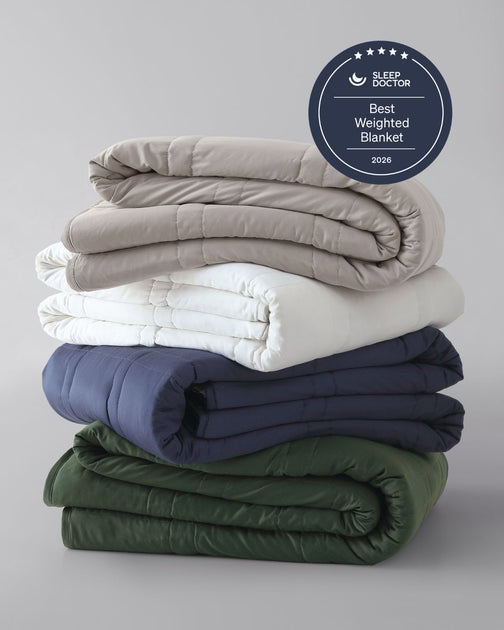
Most hotel throws are chosen for aesthetic and cost reasons, not sleep performance. They are typically lightweight, synthetic, and sized for decoration rather than comfort.
This comparison helps travelers understand what they are working with and what they might choose to supplement. Standard hotel throws serve as the comparison point because they represent the default option most travelers encounter. Features are evaluated against the same four criteria covered in this article.
| Feature | Baloo Living’s Weighted Blanket | Standard Hotel Throw Blanket |
|---|---|---|
| Temperature Regulation | Breathable cotton adapts to body | Typically synthetic and traps heat |
| Tactile Comfort and Pressure | Even gentle resistance | Surface warmth only |
| Hygiene and Material Safety | Chemical-free construction | Unknown material sourcing |
| Adaptability Across Trips | Works for varied spaces | Limited to hotel room use |
| Care and Maintenance | Machine washable and dryer safe | Handled by accommodation |
| Long Term Value | Lasts across multiple years | Single use from traveler perspective |
The hotel throw wins on convenience, as it requires no packing and no cost. However, on every performance metric relevant to better rest while traveling, it falls short. Temperature regulation, tactile comfort, hygiene confidence, and adaptability all favor a purpose-chosen sleep layer.
| Pro Tip: View your sleep gear as a travel essential, not an extra. The consistent comfort and hygiene of your own blanket far outweighs the minor inconvenience of packing it. |
Choosing the Right Travel Sleep Gear
Choosing sleep gear for travel is ultimately a personal decision, but it benefits from a clear framework. The four evaluation points covered in this article apply regardless of which specific item a traveler is considering. The goal is not to overpack, but to bring one item that restores a sense of physical predictability in an unpredictable environment.
For travelers who sleep lightly or run warm, hotel sleep comfort is rarely guaranteed by the accommodation itself. The sections below help narrow that decision based on who is doing the traveling and what they are optimizing for.
Best Uses for Comfort Layers
Travel sleep layers perform best in situations where the ambient environment is unpredictable, but the traveler controls their own bedding. This includes mid-range hotel stays where the provided bedding is clean but impersonal, and road trips with overnight stays in varied accommodations.
A single reliable sleep layer removes one variable from the rest equation. Across a week-long trip, this consistency accumulates into meaningfully better outcomes.
Temperature-sensitive travelers benefit most from this intentional approach. If a traveler consistently finds hotel rooms overcooled or poorly ventilated, a breathable cotton layer offers a way to regulate independently of the thermostat.
For those considering a sleep layer specifically suited to temperature-sensitive rest, Baloo Living’s best cooling weighted blanket represents the kind of sleep support gear travelers in this category tend to reach for. It offers a natural cotton construction that responds to the body rather than working against it.
Alternative Approaches for Minimalist Travelers
Not every traveler needs to bring sleep gear on their journey. For those taking short overnight trips with carry-on-only luggage, the weight and volume of a full comfort layer may not justify the benefit.
Travelers who sleep deeply regardless of environment may find their existing setup sufficient. The four-point framework in this article is most useful when sleep disruption is a recurring, trip-specific problem.
Travelers sharing accommodations with others should also account for size when choosing a sleep layer. A comfort item sized for individual use is less disruptive in shared rooms and easier to manage in transit. Items that require a commercial washing machine or specialized care are less practical for frequent trips with limited laundry access. This tradeoff is worth factoring in before purchase.
Long-Term Value of Sleep Items
A well-chosen travel sleep item is one of the few travel accessories that improves with familiarity. Unlike noise-cancelling headphones or eye masks, a sleep layer that a traveler has adapted to becomes a reliable sensory anchor. This is especially true for items with consistent tactile feel and breathable construction that perform the same way across climates. Over time, the investment case becomes self-evident.
Items made with natural materials and certified construction require fewer replacements and maintain their feel longer than synthetic alternatives. For travelers who take four or more trips per year, a quality sleep layer pays for itself. It delivers cumulative improvement to energy, mood, and recovery across those trips. That math is worth doing before defaulting to whatever the hotel provides.
Frequently Asked Questions
Will this weighted blanket make me hot?
No. The blanket is made with breathable cotton and lead-free glass beads, unlike brands that use polyester liners. This design helps regulate body temperature in all climates and seasons, keeping you comfortable throughout the night.
How do I wash my Baloo blanket?
The blanket is machine washable and dryer safe for easy care. Wash it by itself in cold water on a gentle cycle and dry on low heat. A king-size blanket should be washed in a commercial machine.
How do I choose the right weight?
The 12-pound throw is the most popular for individual travel use. For larger sizes, choose 15 pounds if you are over 65, a side sleeper, or have joint pain. Choose 20 pounds for healthy back or stomach sleepers who prefer a heavier feel.
What happens if it is not for me?
You can try it for 30 days to see how your body adapts to the weight. You can exchange it for a different size or style with free shipping both ways. You can also get a refund if you selected the free returns option at checkout.
Pre-Purchase Checklist for Sleep Gear
Before buying any sleep comfort item for travel, run through the following checklist. These questions apply to any product in the category and are drawn directly from the four evaluation points covered in this article.
- Does the material breathe? Confirm whether the construction uses natural fibers or synthetic alternatives. Natural materials regulate temperature in both directions, whereas synthetics tend to trap heat.
- Is the feel consistent and even? Look for quilted construction that distributes fill evenly across the surface. Uneven weight creates pressure points rather than restful resistance.
- Can it be machine washed? Verify the care instructions before purchasing. Items that require dry cleaning are significantly harder to maintain on the road.
- Is the fill material safe and certified? Check for material certifications that confirm the product has been tested free of all chemicals across every component.
- Does the size work for your trip type? Match the item to your most common travel format. A throw-sized comfort layer works across hotels, road trips, and shared spaces.
- Will it pack without special effort? Consider whether the item comes with a carry option and whether it folds to a manageable size without requiring compression gear.
- Is the price justified by expected use? Calculate cost per night across anticipated trips. A higher quality item that travels reliably for years outperforms a cheaper alternative replaced annually.
Good travel sleep tips rarely begin with the destination; they begin with what a traveler brings to it. The items chosen for rest are not accessories, but rather the conditions under which everything else on a trip becomes possible. A clear checklist removes the guesswork from this process. A single well-chosen sleep layer, evaluated against these criteria, is enough to meaningfully shift the quality of rest across an entire trip.
