

Florence does not announce itself the way Rome does. There is no single monument that dominates the skyline and no sprawl to cross. You step out of the station, walk ten minutes, and you are already standing in the middle of the Renaissance. The historic center can be crossed on foot in about twenty minutes, which is exactly why two days feels like enough and, at the same time, never quite enough.
Two Days Works Because the City Is Small
Most cities ask you to choose between breadth and depth. Florence lets you have a version of both. The big sights sit close together, so you are not burning daylight on transfers, and the quieter pleasures (a workshop, a church with one perfect fresco, a hillside at sunset) are never far from the main route.
The catch is that Florence’s famous places are also the ones that run on timed entry. A plan that leaves the Uffizi and the dome to chance is a plan that ends with you standing in a queue. This itinerary is built around that reality: the day is split into fixed slots you reserve ahead, with loose time around them for wandering.
| If This Sounds Like You | This Itinerary Will Work Well |
| You have a weekend and want the highlights | Day one covers the Duomo, the Uffizi and the river |
| You care more about art than architecture | Day two is anchored by the Accademia and the churches |
| You hate rushing | Only one big reservation each morning, nothing booked back to back |
| You like a view at the end of the day | Both days finish on the hills or the bridges |
Day One Starts With the Dome
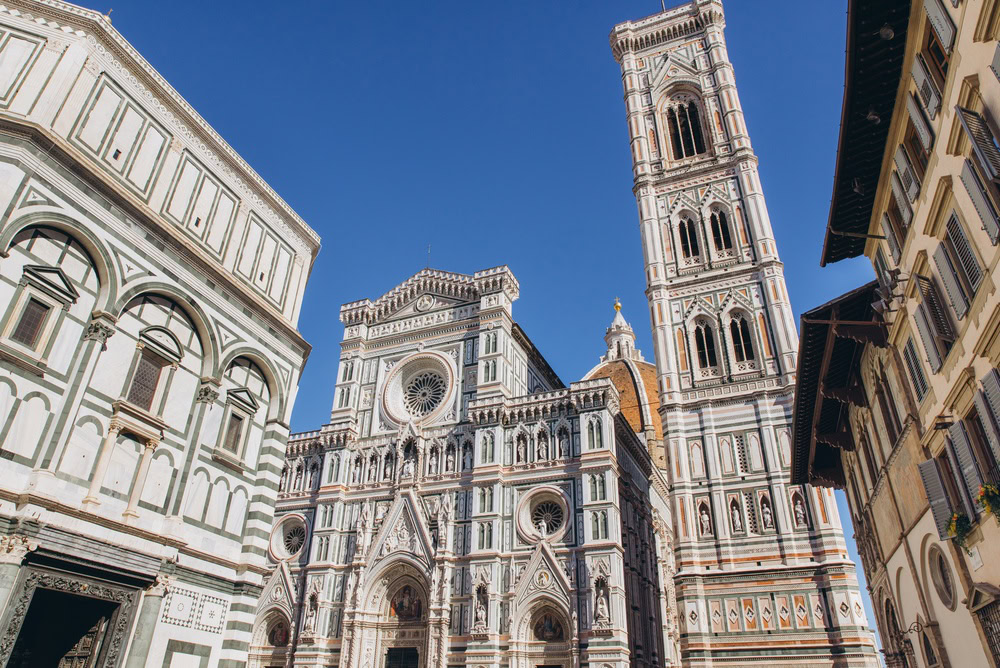
Begin in Piazza del Duomo while the square is still quiet. The cathedral of Santa Maria del Fiore took 140 years to build, and the dome that crowns it took another sixteen. Brunelleschi completed it in 1436 without wooden centering, using a herringbone brick pattern and a double shell, and it is still the largest masonry dome ever built.
Stand back first. The scale of the dome only makes sense from a distance, and the facade is better studied before the crowds arrive. Then walk around to the Baptistery, where Ghiberti’s bronze doors, the Gates of Paradise, tell you more about the start of the Renaissance than most museums manage. Giotto’s bell tower, 85 meters tall, is the other climb on offer.
If you have the legs for it, the climb of 463 steps between the dome’s two shells is the one thing most visitors remember longest. You walk inside the structure itself, so the double-shell trick is no longer a diagram in a guidebook. It is a curved brick wall at your shoulder. If you would rather understand the building than only climb it, a guided visit covers the history and the engineering together.
Spend Late Morning Getting Oriented
After the Duomo, resist the urge to dive straight into the next museum. This is the best moment for a slow orientation walk through the streets that connect the main squares: Via Calzaiuoli toward Orsanmichele, the Straw Market where visitors rub the nose of the Porcellino for luck, then on to Piazza della Signoria and Palazzo Vecchio.
This is also where a guide earns their place. Florence is a city where the story sits in the street names and the stonework, and it is hard to read without someone pointing at it. A small-group morning route that starts near the Duomo and ends at the Ponte Vecchio is a good way to see how the Medici turned a wool town into a capital before you go and see what they collected.
Piazza della Signoria is worth a slow loop on its own. The David that stands outside Palazzo Vecchio is a copy. Michelangelo’s original stood there from 1504 until 1873, when it was moved indoors, and you will meet it properly tomorrow.
Give the Afternoon to the Uffizi
The Uffizi is the one museum you should not improvise. Tickets are nominative and need a reservation, and the gallery is open Tuesday to Sunday from 8:15 am to 6:30 pm, closed on Mondays, January 1 and December 25. That makes it the best place to anchor an afternoon, and a good reason to plan the two days around a Tuesday to Sunday window.
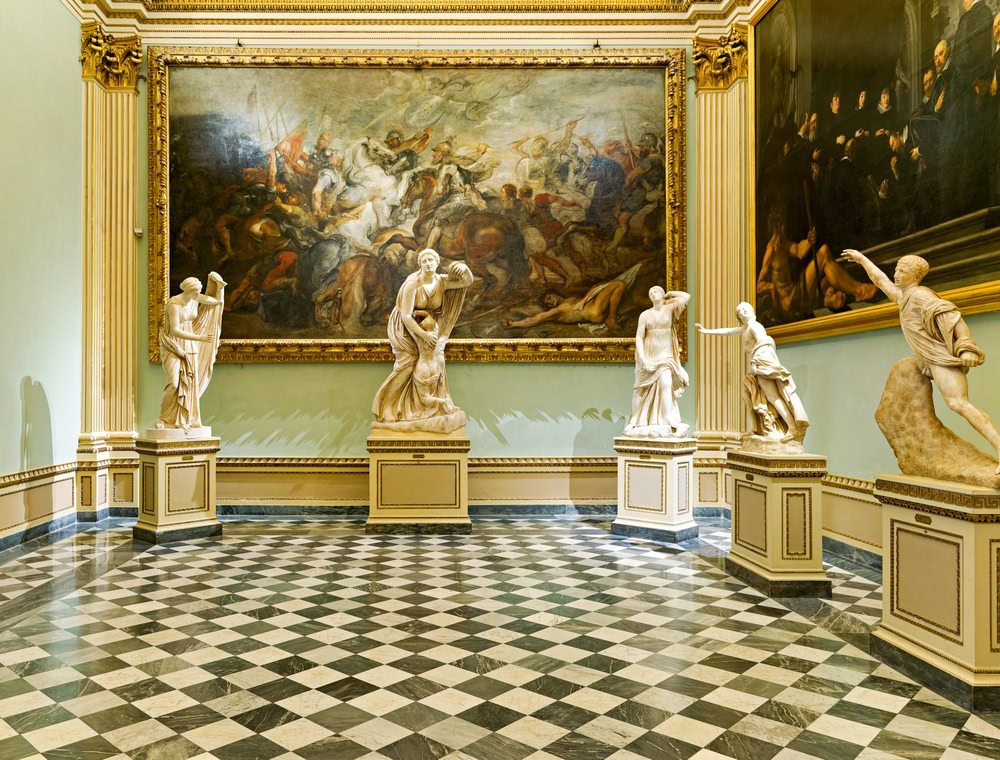
The building itself was designed by Giorgio Vasari and built between 1560 and 1580, and the name simply means “offices.” Inside, the highlights come quickly: Botticelli’s Birth of Venus and Primavera, Leonardo’s Annunciation, Michelangelo’s Doni Tondo, Raphael, Titian and Caravaggio. It is a lot to absorb, and Florence has a long history of visitors getting dizzy in front of it (the French writer Stendhal gave his name to the condition after leaving Santa Croce with a racing heart in 1817).
The practical fix is to choose how you want to see it. Some people prefer a timed ticket and their own pace; others get far more from a guide who takes them to the ten works that matter and explains what they are looking at. The main options run from a one-hour highlights tour to small-group and private visits, and the team at florence.tours lays them out side by side, so you can match the format to how much energy you have left.
When you step out, finish the day at the river. Cross the Ponte Vecchio, rebuilt in 1345 after a flood and still lined with shops. It was butchers until 1593, when Grand Duke Ferdinando I tired of the smell under his windows and let only goldsmiths in. Walk on to the Oltrarno side for dinner, where the restaurants are slightly less polished and noticeably better.
Day Two Begins With David
Michelangelo’s David lives at the Accademia, and mornings are the right time to see it. The statue was carved from a single block of marble and the room is built around it, so you see it the way it was meant to be seen, at the end of a long gallery with Michelangelo’s unfinished Prisoners leading you toward it.
Give it about an hour and no more. The Accademia is compact, and the temptation is to linger until the crowd thickens. If you want the story behind the statue and its move from the square, a guided visit is worth it, and some combine the Accademia with the Uffizi so one guide covers both.
Cross to the Oltrarno for the Real Florence
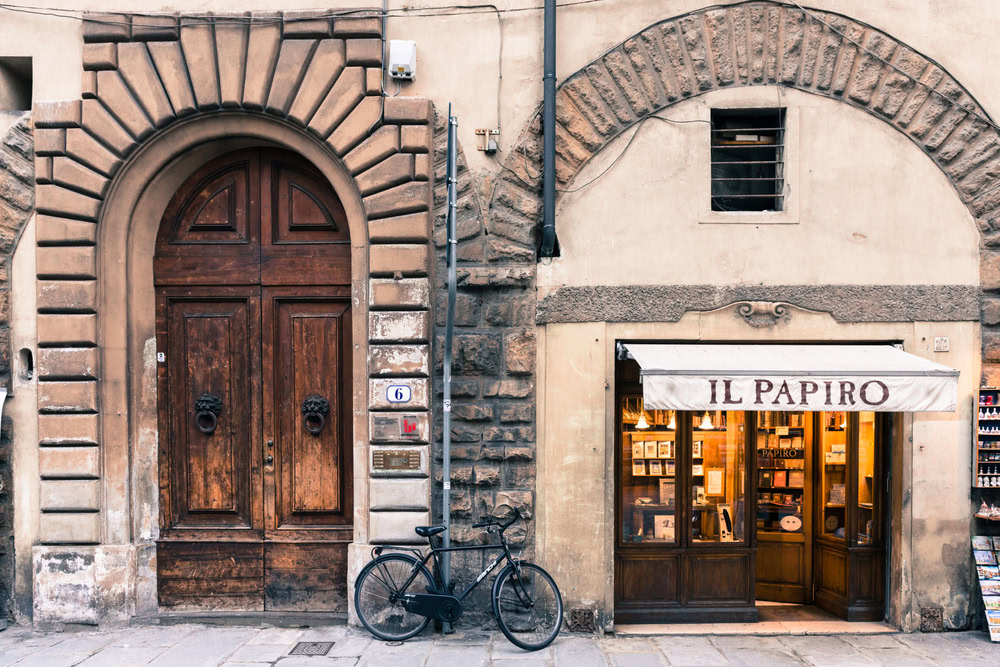
By midday, head back over the river. The Oltrarno, the district on the south bank, is where Florence still works with its hands. Goldsmiths have held the Ponte Vecchio since 1593, but the quieter crafts, such as bookbinding, gilding and framing, happen in open-front workshops here, and the leather workshops cluster around Santa Croce on the other side of town.
Santo Spirito is the neighborhood’s natural center. The church holds a wooden crucifix attributed to Michelangelo, and the square outside is where locals gather for a coffee or an aperitivo. If you want a real lunch rather than a quick sandwich, this is the area to do it. Order the Florentine steak, ribollita or a simple plate of pasta with a glass of Chianti.
Another option is to spend the early afternoon at Santa Croce, the Gothic basilica where Michelangelo, Galileo and Machiavelli are buried. The square outside is the same one where calcio storico, a sixteenth-century mix of soccer, rugby and bare-knuckle fighting, is played each June. It also went under six meters of water and mud in the flood of 4 November 1966, a fact that adds weight to everything you see there.
Finish on the Hills
For the last hours of the trip, climb to Piazzale Michelangelo. Florence sits in a bowl of hills, and the classic view from above takes in the dome, Palazzo Vecchio’s tower and the Arno in a single frame. Go about an hour before sunset, wait for the light to turn, and let the city do the rest. The church of San Miniato, just above, is quieter and worth a few minutes if you still have the energy.
What to Book Ahead and What to Leave Open
A two day trip to Florence comes down to a few decisions made early:
- Reserve the Uffizi and the Accademia before you arrive. Both run on timed entry, and the Uffizi is closed on Mondays.
- Decide whether you want the dome climb, and book that slot too.
- Choose one guided experience. Either a morning walk or a museum visit with a guide will give the rest of the trip more context.
- Leave the Oltrarno afternoon and the evening open. Those are the parts of Florence that reward wandering.
If you find yourself with a third day, the countryside is the obvious next step. Siena, San Gimignano and the Chianti hills are all reachable from the city, and each makes an easy day trip by train or minivan.
Florence is not a city that needs to be conquered in a weekend. Two days will not exhaust it. What they can do is give you a clear sense of why people keep coming back, and a short list of things you want to see next time.
